

Rising bills, temperature drops, recurring faults, your cool room may be past repair. Get an honest assessment from Citywide Melbourne.
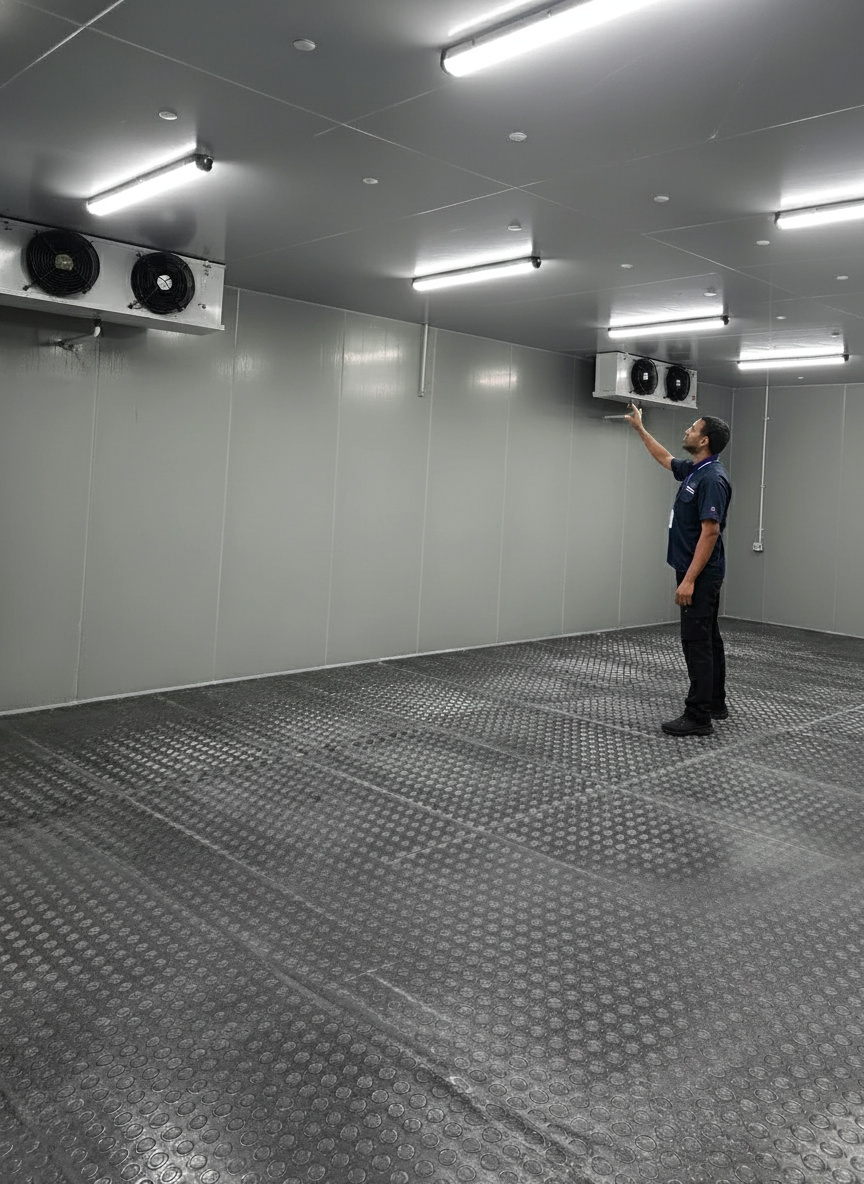
The first sign is usually something easy to explain away. A temperature reading that's a degree or two off gets attributed to the door being left open during a busy service. Stock that spoils slightly early gets blamed on the delivery conditions. Most cold room problems don't announce themselves clearly; they get quietly attributed to something else while the actual fault keeps developing.
The practical consequence is that most businesses end up calling a technician later than they should have. By that point, the repair is typically more involved than it would have been a few months earlier.
Here's what to actually look for.
What Temperature Should a Commercial Cold Room Be?
A refrigerated cold room should hold between 0°C and 4°C. Walk-in freezers sit at or below -18°C, that's the requirement under Food Standards Australia New Zealand Standard 3.2.2, and it's worth understanding why it matters practically, not just technically.
Sustained temperature drift outside those ranges means you're outside HACCP compliance. The implication isn't just faster spoilage; it's that your temperature log becomes a liability if you're audited. That's the part most businesses don't think about until they're in the middle of it.
If your log already shows variation across multiple read points throughout the day, bring it when you call a technician. The pattern across time tells more than any individual reading.
1. Temperature Fluctuating or Running Warmer Than It Should | This is the one that matters most. It's also the one most likely to go unnoticed until the stock is already compromised. A cold room struggling to maintain a stable temperature usually points to one of three things: a failing thermostat or sensor, refrigerant loss, or compressor wear beginning to show. The frustrating part is that the early symptom food that's marginally less cold than expected often gets attributed to how the product was stored rather than the unit itself. Melbourne commercial kitchens run their cold rooms continuously across seasons with significant ambient temperature variation. Even minor sensor drift can compound faster than it looks on a gauge. Six degrees and three degrees look close on a gauge. The practical difference is that 6°C puts you outside the HACCP-compliant range required under FSANZ Standard 3.2.2, which means anything with a short shelf life is deteriorating faster than it should, and your temperature log is recording a compliance breach rather than just a fluctuation. Temperature logs that show variation across multiple read points throughout the day, not just one spike at a particular time, tend to indicate a consistent underlying fault rather than something incidental. That's the kind of pattern a technician will want to see. |
2. Excessive Ice Buildup Inside the Unit | Some frost is normal in a freezer. Visible ice accumulating on the evaporator coils, around the door frame, or anywhere on the walls of a refrigeration cool room is not. The most common causes are a faulty defrost cycle, a door seal that's not creating a clean closure, or refrigerant behaving inconsistently. When warm, moist air enters a cold environment repeatedly, through a gap or a compromised gasket, it freezes on contact with the coldest surfaces first, usually the evaporator coils. The problem builds on itself. Ice-coated coils transfer heat less efficiently, so the unit works harder to maintain temperature. That drives up energy consumption and accelerates wear on components that were otherwise fine. Left long enough, excessive ice buildup can cause an otherwise repairable unit to fail completely. It's one of those faults that starts small and earns itself a more expensive repair over time. |
3. Unusual Noises: Grinding, Banging, or Persistent Humming | A cold room in good working order is quiet. The low hum of the compressor cycling, an occasional click, that's it. Grinding, rattling, or a persistent mechanical sound that's louder than normal usually originates from the compressor or the fan motor. Commercial refrigeration units, Skope, Hoshizaki, Austune, and similar, are built to run with minimal audible output. When that changes, it generally means a component is carrying stress it shouldn't be. A grinding or rattling noise that's new is worth acting on promptly. The longer a mechanical fault runs under load, the more likely it is to spread. A failing fan motor starts putting stress on a compressor that was otherwise fine, and what was a single-component repair becomes something considerably more involved. |
4. Energy Bills Climbing Without Any Change in Usage | This connection is easy to miss because it doesn't present as a refrigeration problem. If your electricity costs have increased but kitchen hours and equipment haven't changed, the cold room is worth looking at. A system losing refrigerant or dealing with blocked condenser coils has to work significantly harder to hold its target temperature. That extra load shows up in consumption, and in commercial settings, the gap between an efficient and an inefficient unit can run to several hundred dollars per quarter. Condenser coils are worth knowing about specifically. They get dirty in busy kitchen environments, including grease, dust, general airflow debris, and as they block up, the unit's ability to shed heat drops. Most businesses only find out this is happening after the energy bill has been climbing for a quarter or two. It's one of the more preventable causes of efficiency loss, which is part of what makes it frustrating when it does come up. Condenser coils are worth knowing about specifically. They get dirty in busy kitchen environments, including grease, dust, general airflow debris, and as they block up, the unit's ability to shed heat drops. Most businesses only find out this is happening after the energy bill has been climbing for a quarter or two, sometimes $300 to $500 more than it should be. It's one of the more preventable causes of efficiency loss, which is part of what makes it frustrating when it does come up. |
5. Door Seal Damage or Cold Air Escaping | Run your hand slowly around the door frame while the cold room is closed. Any temperature difference at any point along the seal, or condensation forming along the edges, means the gasket isn't closing cleanly. A compromised seal creates a persistent warm air entry point that the unit has to constantly compensate for. It doesn't cause a dramatic single failure; what it does is force the system to run harder than it should, over a sustained period. Temperature inconsistency follows. Ice builds faster than normal on the evaporator coils. Components that should have years of service life start wearing at a rate they weren't designed for. By the time the seal gets identified as the cause, the unit has typically been running under that strain for months. Cracks, stiffness, or sections that don't sit flush against the frame are all worth replacing. A new gasket is one of the cheaper jobs in commercial refrigeration servicing. |
6. Condensation or Moisture Inside the Unit | Condensation inside a cold room isn't always a problem on its own. The issue is when it keeps coming back in the same spot, usually around the door seal channels or where two panels meet. What that pattern typically means is warm air finding a consistent entry point. Either the seal isn't closing cleanly at that section of the door, or a panel joint has opened up enough to let moisture in regularly. Over time, that repeated contact between warm, moist air and cold surfaces creates the conditions for mould growth, which shifts the problem from a maintenance question to a food safety one. Worth noting: condensation that's widespread across the interior walls rather than concentrated around specific joints or seals can also indicate the unit is struggling to maintain temperature consistently. That's a different fault, but it often presents visually the same way. |
7. Food Spoiling Before Its Use-By Date | This is the most direct signal of all, and the one that usually prompts the call. Vacuum-sealed product going off early. Dairy expiring before the date. Produce wilts faster than it should, given normal throughput. These aren't storage or delivery issues; they're temperature issues. Warm spots inside a cool room often develop before the overall temperature reading reflects them. This is why product performance is worth monitoring as its own data point, independently of what the gauge is showing. If something's consistently spoiling early, the unit's temperature consistency across its full internal volume is worth checking, not just the sensor reading at the door. |
FAQ
Q1 - Should You Repair or Replace Your Commercial Cold Room?
This is the question most businesses hit eventually, and the answer isn't always obvious from the symptoms alone.
For commercial appliances, particularly cool rooms, it's worth repairing almost every time. A replacement unit starts at $10,000 to $20,000 minimum. A repair is rarely close to that figure.
Repair generally makes sense when the unit is under 8–10 years old, the fault is isolated to a single component, thermostat, door seal, or fan motor, and the system has otherwise been reliable. A compressor replacement or new thermostat on a well-maintained unit often adds years to its service life. The repair cost is significantly lower than replacement, and the unit's baseline efficiency is still reasonable.
Replacement becomes the better call when the unit is 10–12+ years old, breakdowns are happening with increasing frequency, or repair costs are approaching 40–50% of the unit's replacement value.
Newer systems are genuinely more efficient, 20–30% over units from a decade ago is a reasonable expectation, not a sales figure. The refrigerant question is also worth factoring in. Older systems running on refrigerants that are being phased out can become difficult and expensive to service as those gases get harder to source. That's not an immediate problem for most systems, but it tends to surface as a cost at the worst possible time.
Whether repair or replacement is the right call usually requires a commercial appliance repair technician to look at the specific unit. Age and fault type are the starting point, but service history matters too; a 12-year-old unit that's been well maintained with one isolated fault is a different conversation from one that's been patched repeatedly across the same period.
Q2 - How Much Does Commercial Cold Room Servicing Cost in Melbourne?
A standard cold room service in Melbourne typically depends on the size of the unit and what the service includes.
Component repairs are where the range opens up considerably. A door seal replacement, parts and labour are relatively cheaper as it is a straightforward fix in commercial refrigeration. The thermostat and sensor sit higher, depending on the unit. Compressor replacement is in a different category altogether: with the final figure depending heavily on unit size and what the compressor specification requires.
Emergency call-outs after hours carry an additional premium, on top of the standard labour rate, depending on timing and provider.
All of the above are Melbourne market ranges based on typical service scenarios. The actual quote for your unit depends on what the technician finds on inspection.
Q3 - How Often Should a Commercial Cold Room Be Serviced?
For most commercial kitchen operations, professional servicing every six months is the standard starting point. Kitchens running high-volume continuous service tend to move to quarterly, particularly where grease is accumulating on condenser coils faster than a twice-yearly service can keep up with.
Between professional services, condenser coils are worth cleaning monthly. In busy kitchen environments, they accumulate grease and dust faster than most people expect, and a blocked coil is one of the more preventable faults. As for door seals, a quick visual check every few weeks is enough. You're looking for cracking, stiffness, or any section that's started pulling away from the frame.
Most food businesses are already logging temperatures daily for HACCP compliance. That same log is useful as an equipment health record; gradual temperature drift shows up there before it becomes visible anywhere else.
The Warning Signs That Don't Announce Themselves
Most cold room failures don't arrive suddenly. They build.
A seal that's been soft for a few months. An energy bill that's crept up across two quarters. A temperature log that nobody quite connected to the unit's performance until something spoiled overnight. The businesses that avoid the expensive emergencies tend to be the ones running a light but consistent maintenance routine, not waiting for a fault to make itself obvious.
If you're seeing any of the signs above, or if your cold room is overdue for a service, contact us. Citywide Appliance Repairs services commercial cold rooms across Melbourne, with same-day inspections available for urgent faults.

When to Service or Replace Your Commercial Dishwasher?
From limescale to leaks, know when your commercial dishwasher needs attention. Melbourne’s kitchens trust Citywide for fast, reliable repairs. Book now. Most hospitality businesses don’t

When Should a Restaurant Replace or Repair Its Cool Room?
Rising bills, temperature drops, recurring faults, your cool room may be past repair. Get an honest assessment from Citywide Melbourne. The first sign is usually
Hoshizaki Ice Machine Troubleshooting Guide
Hoshizaki ice machine not making ice or beeping? Diagnose the fault fast and know when to call a Melbourne technician. Same-day inspections available. Hoshizaki Ice
Appliance Parts No Longer Available? We Custom Make Them
Discontinued parts don’t always mean a write-off. We custom make oven elements, door glass and more, and we’ll tell you honestly if repair is worth
Washing Machine Not Draining? A Guide on How to Fix It
Washing machine not draining? Most faults come down to the filter or hose ÔÇö fix it yourself or book a same-day Melbourne technician. You opened
Commercial Oven Repair or Replace? Melbourne Cost Guide
Wondering whether to repair or replace your commercial oven? A Melbourne cost guide covering realistic price ranges, downtime, and when each call makes sense. For