

Discontinued parts don’t always mean a write-off. We custom make oven elements, door glass and more, and we’ll tell you honestly if repair is worth it.
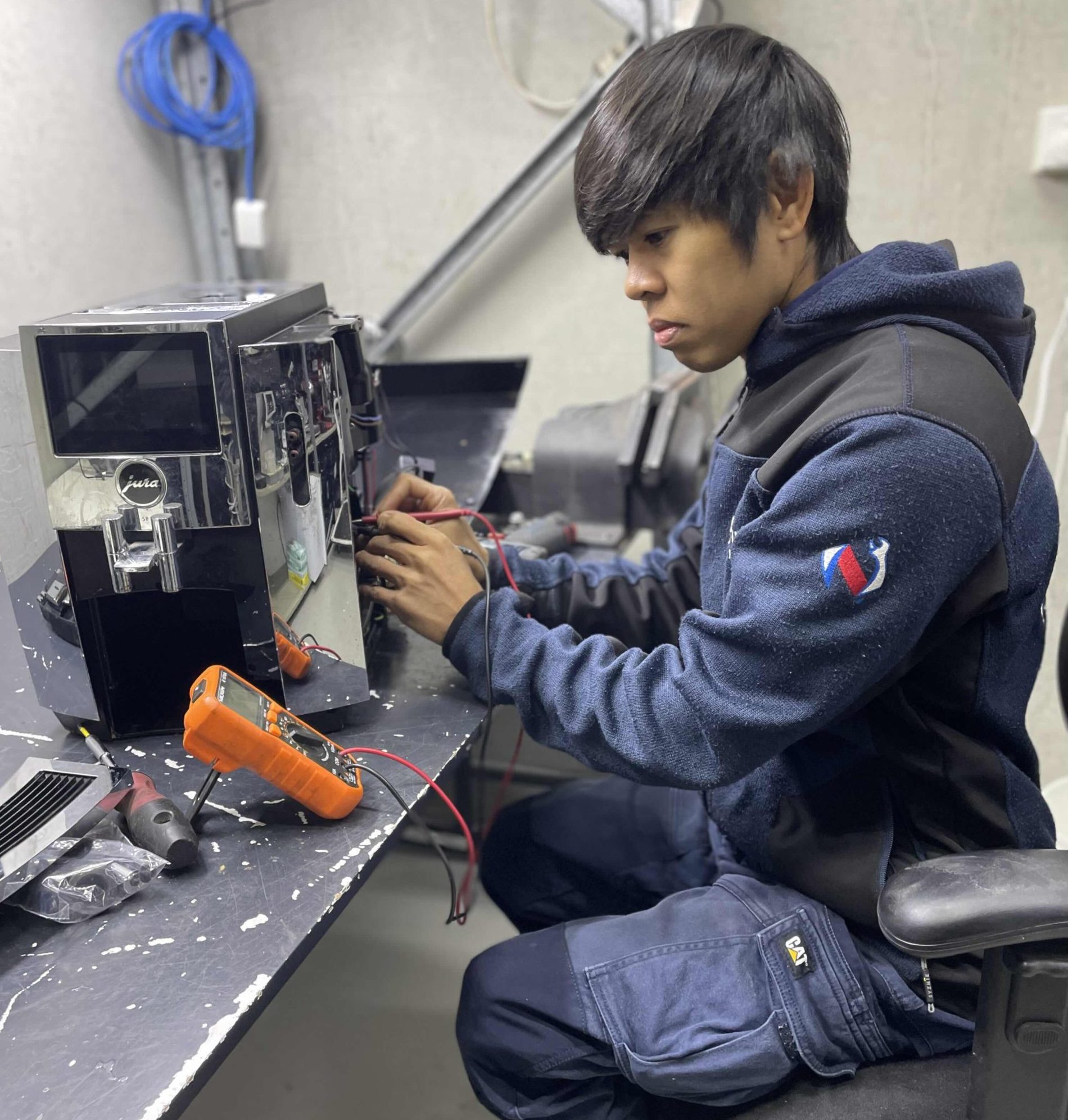
A discontinued part isn’t automatically the end of an appliance. For many older models across Melbourne, more is achievable than most repair companies will tell you, because we manufacture certain replacement parts directly. Whether it makes financial sense depends on the appliance. Here’s what’s genuinely possible.
What does “no longer available” actually mean?
When a manufacturer discontinues a model, spare parts tend to follow within a few years. Some go quickly. Others linger in third-party supply chains for a decade before quietly disappearing.
“No longer available” (NLA in the trade) typically means one of two things: the original manufacturer has stopped production, or the authorised distributors in Australia have sold through their remaining stock. Neither of those necessarily closes the repair conversation. It just changes what’s available and how it’s sourced.
For some parts, there are aftermarket equivalents. For others, custom fabrication is viable. And for some, it genuinely isn’t, and we’ll tell you that plainly before anything else happens.
Which appliance parts can actually be custom-made?
This is where it gets specific. Not every component is reproducible, but more than most people expect can be.
Before fabrication even enters the conversation, there’s another avenue that most repair companies don’t explore: compatible parts across brands. European appliances in particular, including Bosch, Siemens, Neff, and Gaggenau, share significant engineering overlap. A heating element, door hinge, or control component from one brand will often fit and function correctly in another, because they’re built on the same platform or sourced from the same manufacturer. Knowing which parts cross-reference and which don’t is a matter of technical familiarity with how these appliances are actually built, not guesswork. For a lot of older European models, this is what makes a repair possible when the original part number returns nothing.
| Oven elements are the clearest example of where custom fabrication itself becomes the answer. We can manufacture a replacement heating element to match any original specification: resistance, shape, terminal configuration, wattage. It doesn’t matter if the oven is fifteen years old or the brand exited the Australian market entirely. If we have the original element to reference or reliable specs, we can produce a match. |
| Oven door glass is another one. When the factory-original glass is gone, we measure the exact frame dimensions and have replacement panes cut to suit. Tempered, correct thickness, fitted properly. Not a rough workaround. The door functions as it should. |
Fridge defrost elements can be reproduced in certain configurations. Not all. The heating loops used in older units are sometimes custom-wound to order; others use standard profiles that have long since disappeared from supply. We assess this on a case-by-case basis. |
| Plastic components and mouldings, including handles, trim pieces, and internal brackets, are workable when the part is structurally simple. Custom moulding adds time and cost, but for the right appliance it can be the difference between a functioning machine and a write-off. |
| Metal components and small fabricated parts can also be produced across most appliance categories. This is typically relevant for brackets, clips, or frame elements where the geometry matters more than the material spec. |
Ovens: the most common custom-part scenario
| Parts | Fabrication Possible for every brands |
| Elements fails | Oven faults often come down to two components; the element and the door seal. Both are repairable in the vast majority of cases, even on discontinued models. Elements fail from repeated thermal cycling over the years of use. The failure is usually obvious; the oven won’t reach temperature, or it heats unevenly. In older Smeg, Fisher & Paykel, or Westinghouse ovens, elements can be next to impossible to source through standard channels. Custom fabrication resolves that. |
| Door seals | Door seals are a different story. Most are silicon or fibre glass-based and follow fairly standard profiles. We carry a wide range and can source or fabricate where standard supply falls short. Door glass is less commonly the problem, but when it is, it tends to be because the original glass has been discontinued or the oven is an unusual size. If you’ve found glass for your oven model nowhere online, it doesn’t mean it can’t be made. It means it needs to be measured and cut to order. |
Fridges: what’s actually reproducible?
Fridge repairs are where the custom-part question comes up most often for older units. The defrost system is the main culprit.
Defrost elements in older fridge models are sometimes simple resistive heating coils wound around the evaporator. When these fail, the fridge ices over and eventually stops cooling properly. In some configurations, we can reproduce the element. In others, particularly where the geometry is highly specific or involves a proprietary assembly, it’s not viable.
Door seals on fridges are almost always replaceable. The magnetic seal around your fridge or freezer door is a high-wear component, and a failing seal can significantly raise your running costs before you notice anything obvious. We carry a broad range of profiles and can fabricate to fit where standard stock doesn’t.
Is custom fabrication actually worth the cost?
Sometimes. Not always. Age matters, but it’s rarely the deciding factor on its own. What we’re actually looking at is whether the fault is isolated or part of a broader pattern: a compressor running rough, a control board that’s already been replaced, a motor that’s drawing more current than it should. One failing part in an otherwise sound appliance is a different conversation to one failing part in an appliance that’s quietly deteriorating across the board.
The cost comparison against replacement isn’t always obvious either. Sometimes it’s clear-cut. Other times, it’s closer than people expect, and the right answer depends on what replacement actually means for that specific space and setup. We work through that at the diagnostic visit, before anything is ordered or committed to.
What if the repair doesn’t make financial sense?
Then we say so, and we do it before any work starts.
We carry refurbished appliances with a 3-month warranty, and new stock where that’s the better fit, with the manufacturer’s warranty behind it. If replacement is the call, we’ll handle the recommendation and the installation. You don’t have to start the search from scratch or deal with a separate supplier.
It matters because a broken appliance is rarely the whole problem. There’s usually a space constraint, a budget ceiling, something already built around the existing unit. We factor that in rather than just pointing at a price list.
What happens at a diagnostic visit?
A technician comes out, assesses the appliance, and gives you a straight answer: what the fault is, what fixing it actually involves, and whether it’s worth pursuing. If fabrication is on the table, that gets discussed at this point, including a realistic cost and timeline.
You pay the call-out fee. Nothing beyond that until you’ve decided to proceed.
We’ve already been told it can’t be fixed!
That’s the call we get most often. Not from people who’ve just discovered the fault, but from people who’ve already had someone out, already been given the bad news, and are trying to figure out what comes next.
It’s a frustrating position to be in. The appliance is sitting there, not working. Replacement is more than you wanted to spend. And the repair company that came out didn’t offer much beyond “parts aren’t available anymore,” as if that was the end of the conversation.
Sometimes it is. We won’t pretend otherwise. But more often than not, “parts aren’t available” means parts aren’t available through standard supply channels. It doesn’t mean the part can’t be made. Those are two different problems, and they don’t always have the same answer.
We manufacture certain components directly: oven elements wound to the original specification, door glass measured and cut to fit the exact frame, defrost elements reproduced for older fridge models, plastic mouldings and metal fabrications for components that simply don’t exist in the supply chain anymore. It adds a step. It adds some cost. Whether it makes sense depends on the appliance and what else is going on with it, and that’s exactly what the diagnostic visit is for.
If the repair stacks up, we do it. If it doesn’t, we tell you clearly before anything is ordered or started, and if replacement is the right call, we handle that too: refurbished with a 3-month warranty, or new with the manufacturer’s warranty, installed and set up properly.
You pay the call-out fee. That’s it, until you’ve decided to proceed.
So if someone has already been out and told you it’s beyond repair, call us before you make any decisions. It might still be the same answer. But it might not, and it’s worth knowing before you commit to anything.

When to Service or Replace Your Commercial Dishwasher?
From limescale to leaks, know when your commercial dishwasher needs attention. Melbourne’s kitchens trust Citywide for fast, reliable repairs. Book now. Most hospitality businesses don’t

When Should a Restaurant Replace or Repair Its Cool Room?
Rising bills, temperature drops, recurring faults, your cool room may be past repair. Get an honest assessment from Citywide Melbourne. The first sign is usually
Hoshizaki Ice Machine Troubleshooting Guide
Hoshizaki ice machine not making ice or beeping? Diagnose the fault fast and know when to call a Melbourne technician. Same-day inspections available. Hoshizaki Ice
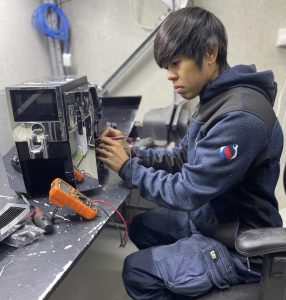
Appliance Parts No Longer Available? We Custom Make Them
Discontinued parts don’t always mean a write-off. We custom make oven elements, door glass and more, and we’ll tell you honestly if repair is worth
Washing Machine Not Draining? A Guide on How to Fix It
Washing machine not draining? Most faults come down to the filter or hose ÔÇö fix it yourself or book a same-day Melbourne technician. You opened
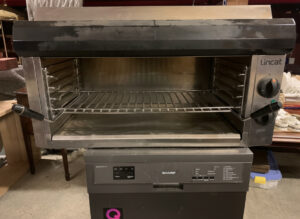
Commercial Oven Repair or Replace? Melbourne Cost Guide
Wondering whether to repair or replace your commercial oven? A Melbourne cost guide covering realistic price ranges, downtime, and when each call makes sense. For