Commercial fridge not cooling? Learn how to diagnose common faults like dirty coils and use our clear guide to decide whether to repair or replace them.
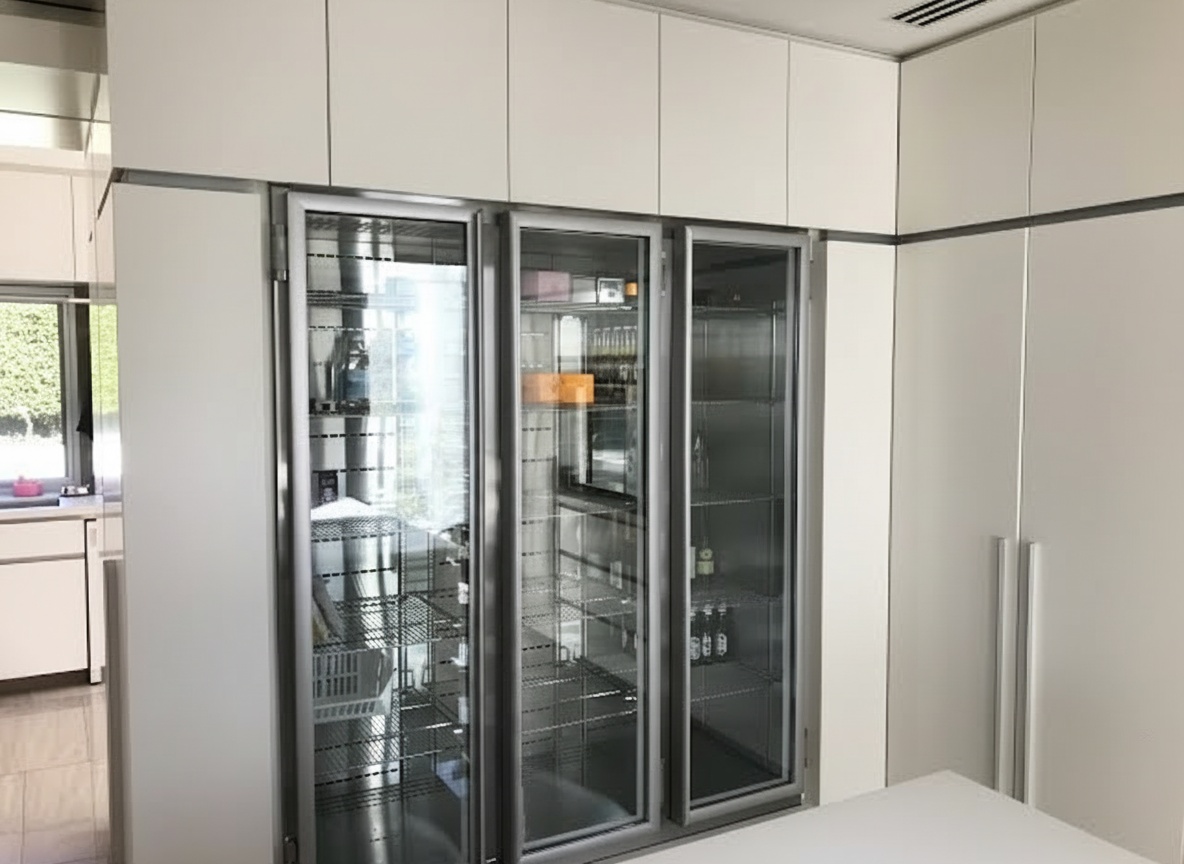
A commercial fridge that’s running but won’t hold temperature is, more often than not, a condenser coil problem before it’s anything else. Grease and kitchen dust build up across the coil over months until the unit can’t shed heat the way it needs to. Refrigerant loss and a tired compressor come up, too, less often, but more expensively when they do.
Under five years old, with the fault sitting on a serviceable part, repair almost always wins. Past eight years on a compressor issue, the cost of putting it right starts landing close enough to a replacement that the maths stops favouring keeping the old unit. Everything between those two ends is where the actual decision lives.
The rest of this guide is about telling those signs apart and working out which side of that repair-or-replace line your unit is sitting on.
Why Is My Commercial Fridge Not Cooling Properly?
Most of the time, it’s the condenser coil. Heat has to leave the refrigerant somewhere, and that somewhere is the coil, so when it’s smothered in grease and lint, the whole cycle backs up. The compressor runs hotter. The unit cycles longer. Stock starts drifting warmer than it should while the fridge still looks, from the outside, like it’s doing its job.
The other faults worth knowing about are refrigerant loss and a compressor that’s losing capacity. Neither comes up as often as a fouled coil. Both tend to be more expensive to put right when they do.
Dirty condenser coils
The coil sits at the back of the unit or underneath, depending on the model, and over time, it gets coated in whatever’s airborne in the kitchen, mostly grease. Once that layer’s thick enough, the coil can’t dump heat into the surrounding air the way it’s designed to.
Refrigerant loss is harder to spot than a fouled coil because it develops slowly. A line that’s leaking will hold up fine through cooler months and then start losing ground once the kitchen ambient temperature climbs into summer. The other thing worth looking for is oily residue near service ports or fittings. Refrigerant rarely escapes without taking a bit of compressor oil with it.
A compressor on its way out behaves differently from one in good condition. It might short-cycle, kicking in, dropping out, and kicking back in across a tight window. Or it might run constantly and still never pull the cabinet down to where it’s meant to be. Either way, by the time the symptom is that obvious, repair economics have usually slipped.
Beyond those, there’s a smaller group of culprits that come up regularly enough to mention. Thermostats drift off calibration with age. Evaporator fans seize, which often presents almost identically to a refrigerant problem because cold air is being made but not moved through the cabinet. Door seals that have done a few years of hard service start letting warm kitchen air in faster than the unit can pull it back out. Working through those one at a time gets you a real answer rather than a guess.
What Are the Warning Signs Your Commercial Fridge Is Failing?
Most commercial fridge faults give a warning. The trouble is the early signs get explained away, the stock blamed on the supplier, a higher power bill blamed on the season, a louder unit blamed on the kitchen being busier than usual.
Here’s what to actually pay attention to.
Ice Build-Up on the Back Wall or Coils
Ice forming where it shouldn’t, usually on the back wall or across the evaporator, points to one of two things. Either humid air is finding its way into the cabinet, or the defrost cycle isn’t clearing what builds up between cycles. The first usually traces back to a tired door gasket. The second points at a defrost timer or sensor that’s stopped doing its job.
Both repairs are straightforward. What turns this into a replacement conversation is when ice keeps coming back after the fix, at which point you’re looking at a deeper system imbalance rather than a wear-item swap.
Inconsistent or Fluctuating Temperatures
A commercial fridge that can’t hold a steady temperature is a food safety problem before it’s a maintenance problem. Milk that is warm in the morning when it shouldn’t be. Produce icing over near the vents. The display drifts by a degree or two every time someone walks past and checks it.
What’s behind it is usually a sensor reading off its actual value, or something physically blocking airflow inside the cabinet. Refrigerant loss can produce a similar pattern but turns up less often. Before calling anyone out, pull a temperature log across a full twenty-four-hour cycle. The shape of that trace tells a technician far more than a single reading taken at the wrong moment of the day.
Loud or Unusual Noises
Commercial fridges are never silent. The sound should be steady, familiar, and close to what it’s been since installation. Anything new, a high-pitched whine on start-up, a knock that wasn’t there last month, is worth taking seriously.
A fan motor that’s failing can usually be replaced before the unit suffers for it. A compressor that’s audibly knocking is a different conversation. Bearings don’t tend to fail quietly first and then loudly. By the time the noise is obvious from across the kitchen, the damage that’s making it has already happened.
Water Pooling Around the Unit
Water on the floor is a slip hazard before it’s anything else, and the source is almost always plumbing-related inside the unit. A blocked drain line is the easiest of the possible causes to deal with. A cracked drain pan needs replacing rather than patching. Persistent leaks that keep returning after both of those have been addressed usually point at insulation failure inside the cabinet, which is the point at which most operators stop spending on commercial fridge repairs.
Power Bills Climbing Without an Obvious Reason
The most overlooked sign is the one on the electricity bill. As condenser coils foul up and compressors lose efficiency, fridges quietly demand more power to do the same job. If the bill’s climbing without longer trading hours, a hotter season explaining it, or extra equipment on the floor, the fridge is usually where to look first.
When Should You Repair a Commercial Fridge?
Repair makes sense when the unit is under about five years old, the fault is limited to a serviceable part, and the repair quote sits well under what a replacement would cost.
The serviceable faults that almost always justify repair:
- Door seals and gaskets
- Fan motors, condenser or evaporator
- Thermostats and sensors
- Drain line blockages
- Defrost timers and components
These are wear items. They’re meant to be replaced periodically across the working life of the unit, the same way you’d replace tyres on a vehicle without questioning whether to keep the vehicle. A repair on any of these usually buys you years of additional service.
There’s a working rule that holds up across most jobs. If the repair quote is sitting under roughly a third of what a comparable replacement would cost, you’re better off repairing. Once it climbs past that, the calculation starts shifting the other way.
When Should You Replace a Commercial Fridge?
Replacement makes more sense when the unit is into its later years, call it past the eight-year mark, and the faults you’re dealing with are repeat offenders rather than one-off problems. A failed compressor or sealed-system issue on a unit that age usually settles the question on its own, because the cost of putting it right lands close enough to the cost of a new unit that the maths stops favouring keeping the old one.
The signals that push toward replacement:
- The compressor has failed or is cycling badly
- Repairs have happened more than once in a six-month window
- Energy bills have climbed without other explanations
- Food safety is becoming unreliable, and temperatures are drifting outside the safe range
- Water leaks have appeared repeatedly despite drain clearing
- The unit’s still running on an older refrigerant gas
The refrigerant point matters more than it did even a few years ago. Older gases like R134a are being phased down progressively under Australia’s commitments tied to the Kigali Amendment, which means availability is shrinking and what’s still out there is getting more expensive to source. A top-up today on an older system is fine. The same job in three or four years could be a meaningfully different conversation, especially if the gas the unit was designed around becomes scarce enough that sourcing it is a job in itself.
Why Compressor Failure Usually Tips the Decision Toward Replacement
The compressor is the most expensive component in any commercial fridge, and once it goes, you’re often looking at a repair bill that’s a sizeable fraction of what a new unit costs. That alone isn’t always a reason to replace. What pushes the decision is what comes with it.
Replacing the compressor in an older unit leaves you with everything else that’s aged alongside it. Insulation that’s lost some of its thermal performance. Door seals on their second or third replacement. A condenser that’s been working harder for years to compensate for declining efficiency elsewhere. The compressor might be new, but the cabinet it’s installed in still isn’t.
The warranty on a replacement compressor is also typically shorter than what you’d get on a new unit. So you’ve spent meaningfully on the repair, the cabinet is still ageing, and the protection on the new part is limited. In most cases, especially on units past the seven or eight-year mark, the maths starts pointing toward replacement. That’s the call we’d make on most older units we see for commercial refrigerator repair across Melbourne hospitality kitchens.
What’s the Average Lifespan of a Commercial Refrigerator?
A well-maintained commercial fridge in a Melbourne kitchen will typically run reliably for ten to fifteen years. Heavy hospitality use, extended hours, high ambient temperatures, and doors opening hundreds of times a day tend to pull that toward the lower end. Lighter use in cooler back-of-house environments can stretch it further.
Brand matters here. Skope, True, and Williams units built for commercial duty cycles tend to outlast budget commercial fridges by a meaningful margin. So does whether the unit was sized correctly for its environment in the first place, an undersized fridge working at the edge of its capacity ages faster than one with comfortable headroom.
The ten-to-fifteen-year window is a working life, not a death sentence. Plenty of units past that age are still operational. The question is whether they’re operational efficiently, and at what running cost.
How Much Does Commercial Fridge Repair Cost in Melbourne?
Repair costs in commercial refrigeration vary widely depending on what’s failed. Some rough Melbourne market ranges to set expectations:
- Door seal or gasket replacement is usually under a few hundred dollars all-in, parts and labour combined
- The thermostat or sensor work runs a little higher, depending on the part that the specific unit takes
- Fan motors, whether on the condenser or evaporator side, sit in similar territory
- Refrigerant work is harder to predict because access and gas type both push the figure around significantly
- Compressor replacement is the one that changes the picture; it’s the largest single repair cost in commercial refrigeration, and on bigger units, it can climb meaningfully into the four-figure range
Emergency after-hours call-outs carry an additional premium on top of standard labour. So does any job that needs custom parts for an older unit, which is where diagnosing before ordering parts actually saves operators money. Ordering the wrong part on an older Skope or True takes the repair from cost-effective to expensive quickly.
Quoting precisely without seeing the unit isn’t really possible, and operators who give you a flat number over the phone are usually rounding up to protect themselves. A real quote needs eyes on the fault.
The Maintenance Habit That Prevents Most of This
The single most effective preventative habit for commercial refrigeration is monthly condenser coil cleaning. That’s it. Most of the failures we see across commercial appliance repairs in Melbourne kitchens, the cooling problems, the rising bills, the compressors that died younger than they should have, trace back to coils that hadn’t been cleaned often enough.
Grease and dust trap heat against the coil. The compressor compensates by working harder. Working harder means running hotter, longer, and through more cycles per day. Hotter, longer and more cycles are how compressors die early.
A vacuum and a brush, ten minutes a month, on every commercial fridge in the kitchen. It’s the cheapest maintenance discipline in hospitality and probably the highest-return one. If nothing else from this guide sticks, let it be that.
Get a Straight Answer on Your Commercial Fridge
If your fridge is running warm, making noises it didn’t used to make, or sitting on a repair history that’s starting to compound, getting a proper diagnosis is the cheapest move you can make. The decision between repair and replacement gets clearer once someone who works on these units every day has seen what’s actually going on inside it.
Across Melbourne kitchens, our technicians diagnose before ordering parts, carry a 3-month labour and 12-month parts warranty on repairs, and don’t charge a second call-out fee if a follow-up visit is needed. Get in touch with Citywide Melbourne Appliance Repairs to book a proper assessment and get an honest answer on whether your unit’s worth keeping.
FAQs
Is it worth repairing a 10-year-old commercial fridge? It depends on what’s failed. A door seal or fan motor on a ten-year-old unit, especially a well-built one, is still worth fixing. A compressor on the same unit usually isn’t; the cabinet has too many other ageing components to make the maths work in your favour.
How long does a commercial fridge repair take? For the everyday faults, gaskets, fan motors, thermostats, a blocked drain, most jobs are finished inside the same visit once the diagnosis is done. Compressor and sealed-system work is the exception. Those may need a return visit, simply because the part isn’t something most technicians carry in the van as standard stock.
Can a commercial fridge be repaired without replacing the compressor?
A broken commercial fridge doesn’t always mean a dead compressor. Most of the time, the issue is much simpler to fix. You’re usually dealing with dirty coils, a faulty sensor, low gas, or a jammed fan. A solid diagnosis figures out exactly what’s failing before you jump to the worst-case scenario.
Why is my commercial fridge running but not cooling?
When your unit runs but won’t actually get cold, the compressor is probably doing its job just fine. The problem lies elsewhere. Filthy condenser coils are the most common culprit, closely followed by refrigerant leaks or broken evaporator fans. Pulling the panels off usually reveals the answer pretty quickly.
How often should a commercial fridge be serviced? Twice a year covers most hospitality kitchens running standard service hours. Higher-volume kitchens where grease accumulates faster on the coil are usually better off on a quarterly schedule. None of that replaces the monthly coil clean; that’s something operators should be doing themselves, regardless of how often the technician visits.