

Fix common DeLonghi coffee machine problems, from no water flow to a jammed grinder. Clear troubleshooting steps, plus when to call a Melbourne technician.
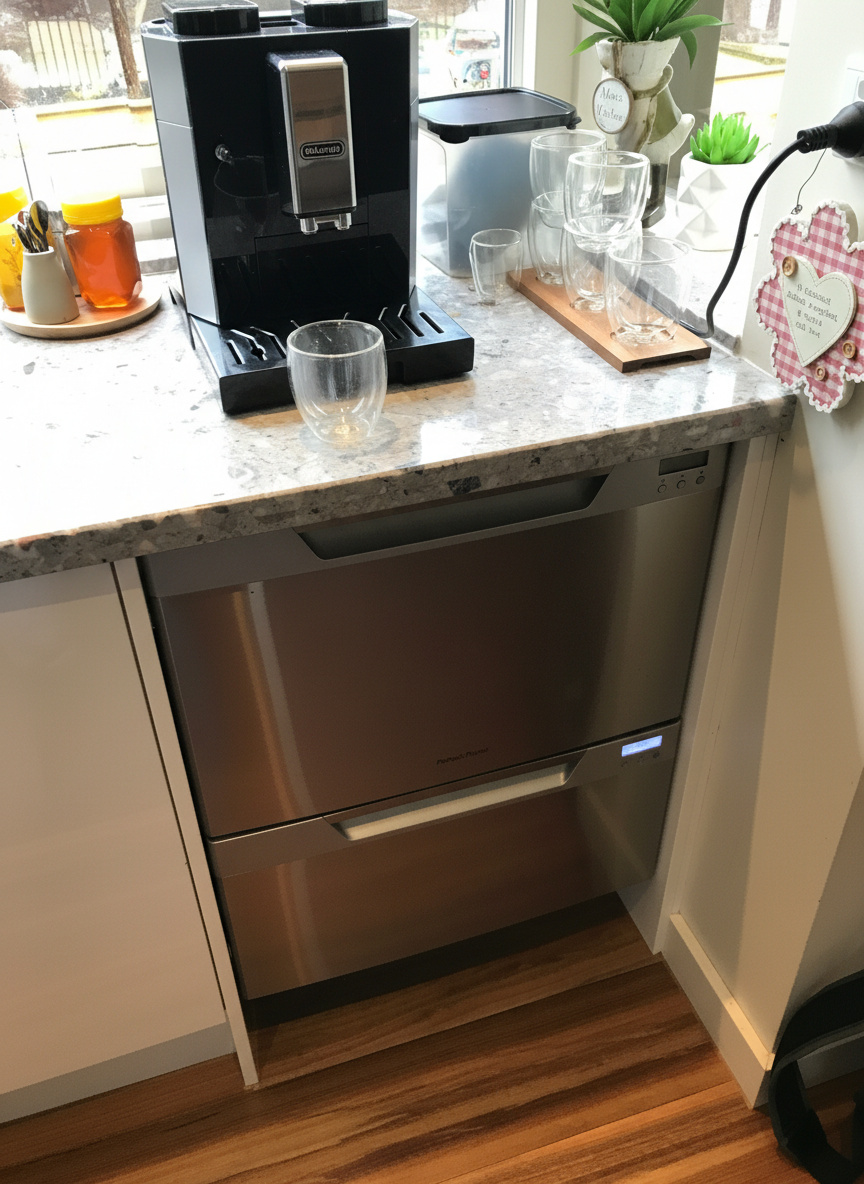
Your DeLonghi won’t push water through. The grinder’s rattling but not grinding. A red triangle’s lit up, and you’ve got no manual handy. Most DeLonghi coffee maker problems trace back to maintenance, not a dead machine: trapped air in the line, limescale buildup, oily beans clogging the burrs, or a brewing unit that hasn’t been rinsed in months. A good share of these you can sort yourself in under ten minutes, and we’ll walk you through which ones. The rest need a technician. Knowing the difference saves you a call-out fee or saves you from making a small fault worse.
This guide covers the faults we see most often on DeLonghi machines across Melbourne homes and cafés: Magnifica, Dinamica, PrimaDonna, the ESAM and ECAM series, and the smaller Dedica espresso units.
Why is no water coming through my DeLonghi?
Air in the line. That’s the cause behind most cases of a DeLonghi with no water coming through, and it’s usually the first thing worth ruling out before you assume anything’s failed.
It happens after the tank runs dry or gets refilled. The pump loses its prime and starts pulling air instead of water. On a Magnifica, this often shows up as water coming out of the steam wand while the coffee spout stays dry. Clearing trapped air from a DeLonghi coffee machine takes about a minute. Put a cup under the steam wand. Open the steam dial all the way and let it run, giving it thirty seconds or so. It’ll gurgle and shudder a bit as the air pushes through; that part’s normal. When the water settles into a steady stream instead of spitting, shut the dial off.
Check the water tank too. If it’s sitting even a couple of millimetre high, it won’t engage the valve underneath, and the machine will read empty while it’s plainly full.
When water still won’t flow after all that, you’re past the easy fixes. A blocked inlet, a worn pump, or an OVP valve that’s given up. None of those is bench jobs, and they’re where a workshop diagnosis earns its keep.
Why is my DeLonghi coffee dripping drop by drop?
Grind too fine. When DeLonghi coffee is dripping drop by drop, that’s the usual reason, though a clogged brewing unit can do the same thing.
A fully automatic machine grinds fresh for every cup, so an over-fine setting strangles the flow before it starts. Most DeLonghi grinders run best somewhere around 3 to 5 on the dial. The part people miss: you can only adjust the setting while the grinder is actually running, and you move it one notch at a time. Turn a stationary grinder, and you’ll jam it.
If the pour’s still crawling after you’ve opened the grind up, pull the brewing unit out and rinse it under the tap. The problem in there is buildup. Coffee oils and old grounds pack down into a paste over a few weeks, and that’s usually enough on its own to choke the flow back to a trickle.
How do I clean and unjam a DeLonghi grinder?
A DeLonghi grinder that runs but won’t grind has almost always swallowed something it can’t chew through, usually oily beans gumming the burrs.
The fault tells you something by how it sounds. The motor might run with nothing coming out of it. You might get a loud buzzing noise and no movement at all, or it jams dead, and the light starts flashing. Oily beans are nearly always behind it. The flavour-coated and dark-roast ones are the worst offenders; they cake the burrs until the whole mechanism seizes. To clear oily beans out of a DeLonghi grinder, empty the hopper, vacuum the loose grounds, and have a look for a stone or a bean fragment wedged where it shouldn’t be. A grinder brush reaches the corners a vacuum can’t.
Now, if the grinder motor runs but still won’t grind once you’ve cleaned it out, that’s a different story. Worn burrs or stripped gearing, and on most DeLonghi models that assembly isn’t a part sold to the public.
Most of this is avoidable. Buy beans in smaller batches, keep them somewhere dry and dark, and if your machine’s already temperamental, leave the glossy oily roasts on the shelf.
What do the DeLonghi warning lights and error codes mean?
Most DeLonghi error codes don’t tell you the machine is broken. They’re 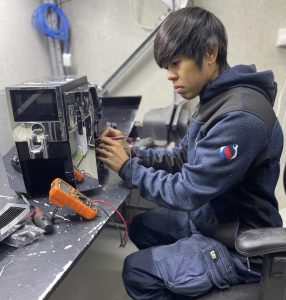 maintenance prompts: refill the water, empty the grounds, run a descale, that sort ofthing.
The common ones are worth knowing on sight. A red descaling light means limescalehas built up and it’s time to descale. The grounds container light means the puck drawer needs emptying, and the water tank light means a refill or a reseat. When every symbol flashes at once, it’s nearly always the tank not sitting right, so pull it out and refit it firmly. The steady red triangle is the one people worry about, and it usually just means the machine wants a check: a brewing unit that isn’t seated, or a funnel blockage.
For a red triangle warning light fix, keep it simple before assuming the worst. Switch off at the power button, let the machine finish its full shutdown, reseat the brewing unit and the tank, then power back on. That alone clears the warning more often than you’d expect. Where the triangle stays lit and there’s nothing obviously wrong behind it, you’re probably looking at a sensor or the control board, and that’s a job for a diagnostic.
How do I reset a DeLonghi coffee machine to default settings?
Resetting most DeLonghi machines to default settings is a two-step move. Turn the steam dial to the “on” position, then press the one-cup button. Three lights flashing together is the machine confirming the reset went through.
The exact sequence shifts between models, so it’s worth a glance at your manual. A reset earns its place when your settings have drifted or a warning hangs around after you’ve done the maintenance. What it won’t do is mend anything physical. A mechanical fault that was there before the reset will still be there after it.
Why does my DeLonghi coffee taste watery and weak?
If your DeLonghi coffee tastes watery and weak, the grind is the first place to look. Too coarse, and the water runs through too fast to pull any real flavour out. Stale beans do it too.
Work it in order. Step the grind finer one notch at a time, pulling a cup between each change so you can taste the difference. Push the strength setting up. And be honest about the beans, because beans well past the roast date taste flat no matter how cleanly the machine runs. On pre-ground, one level scoop does it, tamped lightly. Pack it down hard and you’ll get a slow, bitter drip instead.
A blank shot through a pre-warmed cup helps more than people think. The Thermoblock heats fast, but that first pull into a cold cup sheds temperature on the way down, and a lukewarm extraction always tastes thin.
Why is my DeLonghi leaking water from underneath?
Water leaking from underneath a DeLonghi is most often the drip tray, full, or cracked along the base where you wouldn’t notice.
So start there. Empty it, check it over for hairline cracks, then confirm the water tank and its valve are seated properly, since a poorly seated tank can weep down the back of the machine. Where the water’s clearly coming from inside the body rather than the tray, a seal or an internal hose has likely perished. That’s not one to chase yourself: water pooling near the electronics is a real hazard, so kill the power at the wall and get it booked in.
When the descaling light won’t turn off after descaling?
When the descaling light won’t turn off after descaling, the cycle either got interrupted partway or wasn’t cleared off at the end.
Run the descale right through without stopping it, then complete every rinse cycle the machine asks for afterwards. On a lot of models, two presses of the power button clear the alarm once the cycle’s properly finished. And use an actual DeLonghi descaler like EcoDecalk for it. Vinegar might be the old standby, but it eats at internal components and leaves a sour edge in your coffee that takes weeks of brewing to flush out.
How much does a DeLonghi coffee machine repair cost in Melbourne?
Cost depends on what’s actually wrong. A workshop diagnostic is the cheapest call, a full descale and service sits a step above that, and anything involving a pump, valve or seal repair runs higher again, depending on the part. Treat any number you see online as a rough guide only. The real figure tracks the model and the actual fault, and you’ll get a firm quote after diagnosis and before any work begins.
Frequently asked questions
Q1 – What should I do if my DeLonghi stops working entirely?
Run through the basics: power at the outlet, the cord for any damage, and the water tank filled and properly seated. Power but no water pumping usually means it needs a descale, or the line needs air purged from it. Nothing at all when you hit the switch points back to the cord, the outlet, or an internal fault.
Q2 – Is it worth repairing an older DeLonghi machine?
A well-kept DeLonghi tends to give you around ten years. Anything younger than that with a single mechanical fault is generally worth fixing rather than tossing. A pump or a seal is cheap against a new machine. Once it’s near a decade old and faults start stacking up, replacing it makes more sense. We’ll give you an honest read when we diagnose it.
Q3 – How often should I descale my DeLonghi?
That comes down to your water hardness and how hard you run the machine, but it’ll prompt you with the descaling light when it’s due. Melbourne water sits in the moderately hard range, so most home machines need a descale every couple of months. Drop a water filter or anti-limescale SoftBalls in the tank, and you’ll stretch the gap between them.
Q4 – Can I use vinegar to descale instead of a proper descaler?
Better not to. Vinegar corrodes internal components, and the smell and sour taste are genuinely hard to flush out afterwards. A purpose-made descaler like EcoDecalk costs very little and actually looks after the machine.
Q5 – My DeLonghi Dedica is loud and won’t produce espresso. What’s wrong?
A loud machine that won’t pull a shot is usually a pump running dry or a blockage somewhere in the line. Check the tank’s seated and the line’s primed before anything else. If the noise carries on, the pump or a valve may have failed, and that’s worth putting in front of a technician.
When to book a technician
A fair few DeLonghi common issues never need a technician at all. Purging trapped air, clearing the grinder, running a descale, resetting the tank, resetting the machine. All bench-side jobs. The line worth respecting is anything inside the machine: the pump, the internal valves, the control board, or water leaking somewhere within the housing. An infuser stuck and won’t come out is another one. Give it a gentle try, but force a jammed brewing unit and you’ll crack the housing, which turns a service into a parts order.
If you’re in Melbourne and the steps above haven’t got you anywhere, give us a call. We service DeLonghi machines across the inner suburbs and out through the eastern and western corridors, with genuine parts and a warranty on the work, and we’ll tell you straight whether yours is worth repairing or whether your money’s better spent replacing it.
Contact us to book a DeLonghi service or repair.

When to Service or Replace Your Commercial Dishwasher?
From limescale to leaks, know when your commercial dishwasher needs attention. Melbourne’s kitchens trust Citywide for fast, reliable repairs. Book now. Most hospitality businesses don’t

When Should a Restaurant Replace or Repair Its Cool Room?
Rising bills, temperature drops, recurring faults, your cool room may be past repair. Get an honest assessment from Citywide Melbourne. The first sign is usually
Hoshizaki Ice Machine Troubleshooting Guide
Hoshizaki ice machine not making ice or beeping? Diagnose the fault fast and know when to call a Melbourne technician. Same-day inspections available. Hoshizaki Ice
Appliance Parts No Longer Available? We Custom Make Them
Discontinued parts don’t always mean a write-off. We custom make oven elements, door glass and more, and we’ll tell you honestly if repair is worth
Washing Machine Not Draining? A Guide on How to Fix It
Washing machine not draining? Most faults come down to the filter or hose ÔÇö fix it yourself or book a same-day Melbourne technician. You opened
Commercial Oven Repair or Replace? Melbourne Cost Guide
Wondering whether to repair or replace your commercial oven? A Melbourne cost guide covering realistic price ranges, downtime, and when each call makes sense. For